


Buying Rural Land in Fayette County? Water Access Questions to Ask First

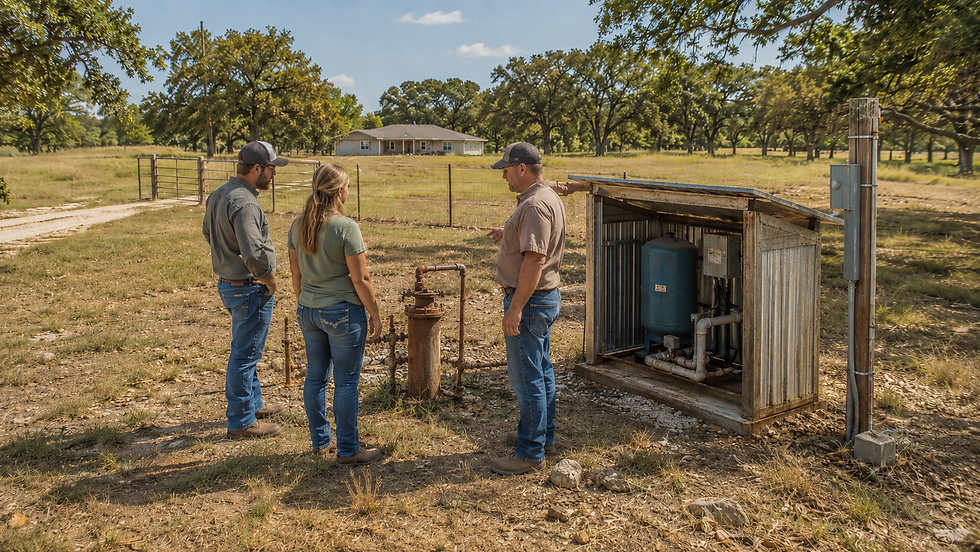
Before buying rural land in Fayette County without city water, you need to know how the property will get dependable water, whether an existing well is already there, and whether that well can support your plans. Do not assume water access just because the land looks buildable, has a road nearby, or sits close to other homes.
That is where a lot of rural land buyers get into trouble.
Land can look perfect on the surface. It may have open space, good road frontage, peaceful surroundings, and enough acreage for a home, barn, livestock, or weekend retreat. But if the water situation is unclear, the property may come with more risk than you expected.
If You Are Looking at Rural Fayette County Land, This Is for You
This is for buyers looking at land outside city water service areas, especially if you are planning to build a home, move a mobile home onto the property, raise animals, start a small ranch, or use the land long term.
It is also for buyers who are still in the “thinking about it” stage. Maybe you have not made an offer yet. Maybe you are walking the property this week. Maybe you are already under contract and trying to figure out what questions to ask before closing.
Either way, water should not be treated like a minor detail.
If the land does not have reliable city water access, a private well may become part of the plan. That does not mean the land is bad. Many rural properties rely on private wells. But it does mean you need to understand the water side before you make a final decision.
The goal is simple: avoid buying land that looks good on paper but becomes stressful once you realize water access was never fully checked.
Why Water Access Can Change the Whole Property Decision
When people shop for land, they often focus on price, acreage, location, trees, views, and road access. Those things matter. But water affects whether the land can actually support daily use.
If you want to live on the property, you need water for the home. If you want livestock, you need water for animals. If you want a garden, workshop, guest house, or future improvements, the water plan matters even more.
The risk is not just “Can I get water someday?” The bigger question is: how much planning, cost, and timeline should you expect before the property becomes usable?
This is where guessing can get expensive.
A buyer may assume there is city water nearby, only to find out later that the property is outside the service area. Another buyer may see an old well on the land and assume it is ready to use, even though it may need testing, repair, pump work, or replacement. Someone else may wait until after closing to think about water, then feel rushed when it is time to build.
Water access can affect your budget, timeline, site layout, and confidence in the purchase. That is why it belongs near the top of your due diligence list.
Water Questions to Ask Before You Buy the Land
Do not rely only on the listing description. Ask the seller, the agent, and the local utility provider. If city water is available, ask where the connection point is and what may be required to connect. If city water is not available, then the next question is whether the property already has a private well.
If there is an existing well, ask for records if available. Helpful details may include when the well was drilled, how deep it is, what pump system is installed, whether the water has been tested, and whether the well has been used recently.
You should also ask what the well was supporting before. A well that served a small weekend cabin may not be enough for a full-time home, multiple bathrooms, laundry, animals, or future buildings. The property use matters.
Here are practical questions to ask:
Is there city water available at the property?
Is there an existing private well?
When was the well last used?
Has the water been tested?
Does the well currently produce enough water for the planned use?
Is the pump, pressure tank, or electrical setup in working condition?
Is the well located where it makes sense for the future home or land layout?
Will the property need a new residential well?
These questions do not mean you need to know everything before calling a professional. They simply help you avoid going into the purchase blind.
Mistakes That Can Turn Good Land Into a Costly Problem
One of the biggest mistakes is assuming rural land works like a city lot. In town, water may feel automatic. On rural land, it is part of the property planning process.
Another mistake is assuming an existing well is automatically a good well. A wellhead on the property does not always mean dependable water is ready for your plans. The system may be old, undersized, unused, damaged, or missing key parts.
A third mistake is waiting until after closing to think about water. Once the land is yours, the pressure changes. You may already be paying on the property. You may have a builder waiting. You may have animals, family plans, or move-in goals depending on that water source.
That is when decisions get rushed.
Buying rural land already comes with enough moving pieces. You do not want the water question to become the surprise that slows everything down. The better move is to ask early, verify what you can, and understand whether a private well needs to be part of your budget and timeline.
What to Have Ready Before You Call
Before calling Texas Southern Drilling, gather a few basic property details. You do not need to have every answer. But the more information you have, the easier it is to talk through the next step.
Start with the property address or location. If the land does not have a formal address yet, nearby roads, a parcel number, or a map pin can help.
Next, think about how you plan to use the property. A future home has different water needs than a weekend getaway. A ranch, small farm, livestock setup, or multi-structure property may need more planning than a basic homesite.
It also helps to know whether the property already has a well. If it does, take note of what you can see: wellhead location, pressure tank, control box, pump equipment, storage setup, or any visible damage. Photos can be helpful if you have them.
You can also prepare these details:
Property location in Fayette County
Current stage: looking, under contract, closed, or ready to build
Planned use: home, ranch, livestock, farm, cabin, or future build
Whether city water is available
Whether an existing well is on the property
Any known water quality, pressure, or pump issues
Your rough project timeline
These details help turn a vague question into a clearer conversation.
When to Check the Service Area and Request Help
If you are seriously considering rural land in Fayette County and water access is unclear, it makes sense to check local service options before the decision gets too far along.
For land buyers who need local well support, Texas Southern Drilling provides water well services in Fayette County for rural properties, homesites, ranches, farms, and landowners planning for long-term water use.
If your main plan is to build a home or support normal household water use, Texas Southern Drilling also handles residential wells for rural homeowners who need a dependable private water source.
The goal is simple: understand the land first, then request a FREE Estimate when you are ready to talk through the property, timeline, and next step.
Request a FREE Estimate
Buying rural land in Fayette County can be a smart move, but only if the land can support what you want to do with it. Water access is one of the first things to confirm because it affects your budget, timeline, and long-term use of the property.
If the land does not have city water, has an old well, or needs a new private water source, do not guess your way through it.
Check the service area, then request a FREE Estimate from Texas Southern Drilling. You can also call or email the team to talk through your property, your timeline, and what you are trying to build.


