


Orange Stains From Well Water: What They Usually Mean

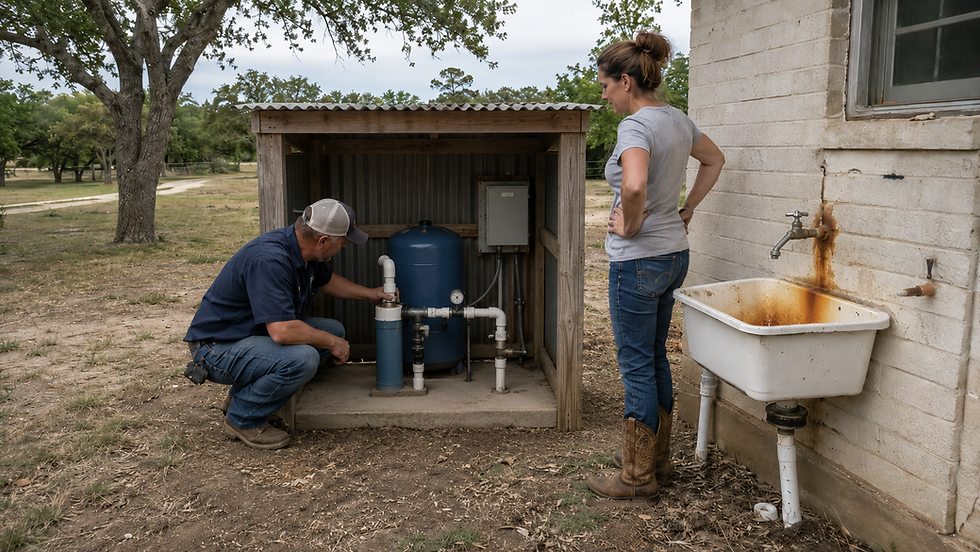
Orange stains from well water usually mean your water contains iron, iron bacteria, or rust-colored mineral buildup somewhere in the well or water system. If your toilet, sink, tub, shower, or laundry keeps turning orange, the stain is a warning sign that your water should be tested before you guess at a solution.
The stain does not always mean something dangerous is happening. But it does mean something in your water or system is leaving residue behind, and ignoring it can lead to more staining, frustration, wasted money, and possible equipment issues.
Seeing Orange Stains on Toilets, Sinks, or Laundry? Start Here
This article is for homeowners with an existing private well who are noticing orange, rusty, reddish, or brownish stains around the house.
You may be seeing stains in:
Toilet bowls or toilet tanks
Bathroom sinks
Shower walls
Bathtubs
Laundry
Outdoor spigots
Pet bowls
Appliances that use water
For rural homeowners, ranch owners, farmers, and property owners, this kind of water problem can feel personal fast. Your well is not just another utility. It is part of how your property works.
That is why orange staining tends to trigger worry. Your brain sees a visible stain and immediately starts filling in the blanks: Is my water safe? Is my well going bad? Is this going to get expensive? Is this hurting my plumbing?
That fear is not silly. It is your brain trying to protect your home, your money, and your water supply. The key is not to panic. The key is to stop guessing.
Why Orange Well Water Stains Should Not Be Ignored
Orange stains are easy to dismiss at first.
You clean the toilet. The stain comes back.You scrub the sink. The ring comes back. You wash white clothes. They come out with rusty discoloration.
That is when the problem becomes more than cosmetic.
Recurring stains usually mean the source of the staining is still moving through the water system. If you only clean the surface, you are treating the result, not the cause.
This is where homeowners often waste money. They buy a random filter, add a cleaner, install the wrong product, or assume a water softener will fix everything. Sometimes that helps. Sometimes it does not. The problem is that orange staining can have more than one cause.
A private well system works best when the cause is identified before the fix is chosen. That protects your budget and helps avoid the classic rural property headache: paying for something twice because the first solution was a guess.
What Usually Causes Orange Stains in Well Water
Orange stains from well water usually come from iron-related or rust-colored material in the water system. The exact cause depends on what is in the water, how the system is built, and where the staining appears.
Iron in the Water
Iron is one of the most common reasons well water leaves orange, red, or rusty stains.
Iron can occur naturally in groundwater. In some cases, the water may look clear when it first comes out of the faucet, then leave orange staining after it sits or comes into contact with air.
Possible signs of iron include:
Orange or rusty stains in sinks and toilets
Rust-colored rings around drains
Metallic taste
Stained laundry
Orange residue on fixtures
Water that looks rusty after sitting
If orange staining shows up with a metallic, musty, or unusual taste, this may be part of a broader water quality issue. This also explains common causes of a metallic or unusual taste in well water in another homeowner's guide.
Iron Bacteria
Iron bacteria can also create orange, reddish, brown, or slimy buildup. This is different from regular dissolved iron.
With iron bacteria, homeowners may notice:
Orange slime inside the toilet tank
Sticky or greasy-looking residue
Musty or swampy odor
Stains that return quickly after cleaning
Clogging or buildup around fixtures
This is one reason visual symptoms matter. A dry orange stain and a slimy orange buildup may point to different issues. Same color, different clue.
Rust or Sediment in the System
Sometimes the orange color may be connected to rust, sediment, or older components in the plumbing or water system.
This is especially worth considering if:
The staining started suddenly
Only one fixture is affected
The water changes color after sitting overnight
There was recent plumbing, pump, pressure tank, or well work
You see small particles in the water
If every fixture in the house has orange staining, the issue may be closer to the well water or whole system. If only one faucet has the problem, the issue may be more localized.
A Mix of Minerals
Well water can carry more than one mineral. Iron may be present with hardness minerals, manganese, sulfur, or sediment.
That is why the color is helpful, but not enough. Orange staining tells you there is a symptom. Testing helps show what is actually causing it.
Why Guessing at the Fix Can Cost You More
The biggest mistake is assuming all orange stains from well water need the same fix.
They do not.
One home may need treatment for iron.Another may have iron bacteria.Another may have sediment.Another may have plumbing-related rust.Another may have a mix of issues.
This is where your brain wants the fastest answer. Visible problem, quick product, done. But water problems are not always that simple.
For example, water softeners for well water can help with certain water issues, but orange staining may need a different look if iron, iron bacteria, or sediment is involved.
Guessing can lead to:
Buying the wrong filter
Replacing parts too early
Ignoring a system issue
Letting stains spread
Damaging laundry or fixtures
Spending money without solving the real cause
A water softener, filter, cleaner, or treatment product may help in the right situation. But the “right situation” is the part that matters.
This is also why this blog should not replace a professional diagnosis. It is here to help you understand what orange staining may mean so you can make a smarter next move.
5 Things to Check Before Calling About Orange Well Water Stains
Before calling Texas Southern Drilling, gather a few simple details. You do not need to diagnose the problem yourself. You just need to describe what you are seeing clearly.
Check these five things:
Where the orange stains appear
Notice whether the stains are in one toilet, one sink, the shower, laundry, or multiple places throughout the home.
Whether the stain is dry, rusty, slimy, or sticky
A dry rust-colored stain may point to one issue, while orange slime in a toilet tank may point to another.
Whether the water has a smell, taste, or color change
Pay attention to metallic taste, musty odor, sulfur-like smell, cloudy water, rusty water, or water that changes color after sitting.
Whether the issue happens with hot water, cold water, or both
This can help narrow down whether the problem may be connected to the water source, plumbing, water heater, or part of the system.
Whether anything changed recently
Think about recent plumbing work, pump work, pressure tank issues, long periods of non-use, changes in water pressure, or new staining after heavy water use.
These details help Texas Southern Drilling understand the symptom faster and decide whether water testing, maintenance, treatment, or system upgrades may need to be considered.
It also reduces stress. When you can describe the problem clearly, the next step feels less overwhelming. The brain likes clarity because clarity feels safer.
When Orange Stains Mean It Is Time to Request Help
You should request help if orange stains keep coming back, show up in multiple fixtures, affect laundry, come with odor, include slime, or appear with changes in water pressure, taste, or color.
You should also get help sooner if the well supports a rural home, ranch, farm, livestock, irrigation, or a property where water reliability matters every day.
Orange stains are not always an emergency, but they are not something to ignore forever either. The longer you guess, the more likely you are to waste money on surface fixes that do not address the source.
If the stain appears suddenly or comes with cloudy water, odor, taste changes, or recent system work, it may also be worth reviewing when to test well water sooner.
For service options, testing direction, and system-level solutions, Texas Southern Drilling’s water treatment and system upgrades page is the better next step. This article explains the symptom. That page explains how Texas Southern Drilling helps with well maintenance, water quality concerns, and system upgrades.
If the issue turns out to require a larger improvement, you can also review financing for water well projects so you understand your options before delaying a needed fix.
Request a FREE Estimate
Orange stains from well water usually point to iron, iron bacteria, rust-colored sediment, or mineral buildup. The important thing is not to guess based on the stain alone.
First, check the Texas Southern Drilling service area to make sure your property is within range. Then request a FREE Estimate before the issue gets worse or costs you more time, cleaning, and frustration.
You can also call or email Texas Southern Drilling if your well water is leaving orange stains, rusty residue, slime in toilet tanks, metallic taste, or recurring discoloration around your home.


